Taipei Tech study finds AI avatar trust follows both rational and emotional paths
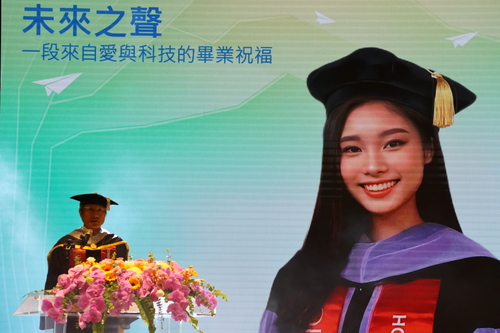
A doctoral dissertation study from National Taipei University of Technology (Taipei Tech) found that consumer trust in AI avatars is not derived from a single factor, but is simultaneously built through cognitive and affective trust, which further influences product trust and behavioral intention. The research findings provide an important reference for human-computer interaction design in applications such as AI avatars, virtual anchors, and live-stream marketing.
As AI avatars increasingly appear in live commerce, digital marketing, and online interaction scenarios, the challenge businesses face is no longer merely whether to adopt the technology, but whether consumers are willing to trust it.
A doctoral dissertation study from the Department of Business Management, College of Management, National Taipei University of Technology, indicates that in AI Avatar live-streaming e-commerce scenarios, consumer trust is not formed via a single path but rather involves two concurrent psychological processes: rational evaluation and emotional connection. Both pathways ultimately influence product trust, which in turn affects behavioral intention.
This research was completed by a doctoral candidate Bao Xiaobo under the supervision of Dr. Geng Qing-Rui; the dissertation is titled “A Study on the Structural Model of the Formation and Transformation of Two-Layer Trust in AI Avatar Live Commerce Scenarios.” The research focuses on how, amid the rapid development of generative artificial intelligence and live commerce, consumers build trust when interacting with AI-based interactive agents and how this trust further influences decision-making.
When the Interaction Counterpart Is Not Human
Studies indicate that previous discussions on trust have largely been based on interpersonal interactions or traditional e-commerce scenarios, while a systematic explanation of trust formation toward virtual interactive agents such as AI avatars remains lacking. Especially in highly interactive environments rich in social cues such as live commerce, consumer trust is not merely a rational judgment but is also shaped by emotional connection.

How Two Pathways Establish Trust
The research results show that interaction quality and perceived quality substantially enhance rational trust, while anthropomorphism and social endorsement contribute to the formation of emotional trust. Further analysis also reveals that, in addition to directly influencing product trust, rational trust can also indirectly enhance product trust through emotional trust. Ultimately, product trust serves as an important bridge connecting AI Avatar trust and behavioral intention.
From Technology Adoption to Designing for Trust
This study targeted consumers with live-stream viewing experience, collected 508 valid samples, and used Partial Least Squares Structural Equation Modeling (PLS–SEM) for analysis. Overall, the study indicates that establishing trust in AI avatars depends not only on technical functionality or response efficiency but also on the ability to establish rational credibility and emotional connection during the interaction process. When businesses implement AI avatars, the key is not merely technological implementation but design of a human–computer interaction experience that incorporates rational credibility and emotional connection, thereby fostering consumers’ dual-layer trust in AI avatars and enhancing product trust and behavioral intention through trust transfer.
Related news:
https://udn.com/news/story/6929/9564265
https://health.setn.com/news/1854721
https://www.ftvnews.com.tw/news/detail/2026619L05M1
https://news.videoland.com.tw/article/217c68b9-b1c9-42dc-becc-a5688cae9352.html
https://cava.tw/entertainment/celebrity/265587