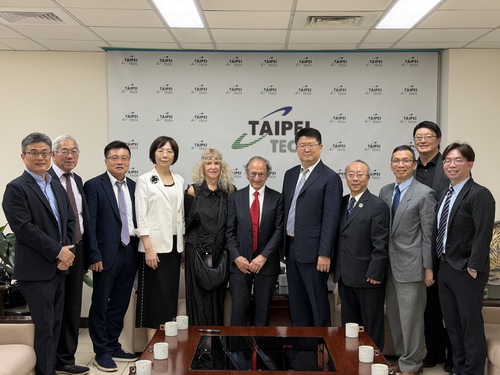
Nobel Laureate in Chemistry Michael Levitt Visits Taipei Tech
Dialogue with Faculty and Students on AI and Life Sciences Broadens Young People’s Global Perspectives
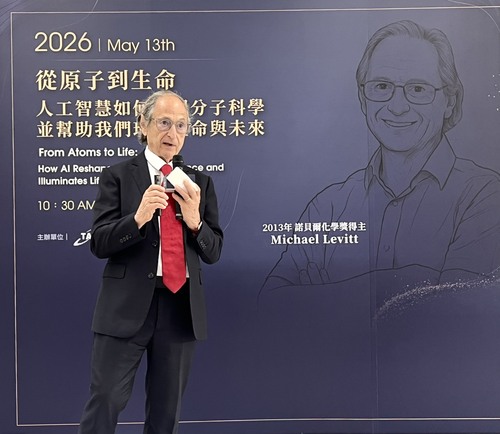
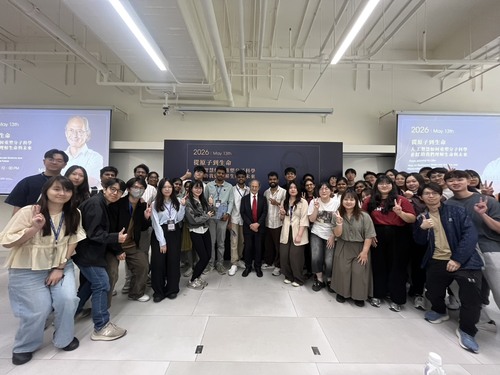
Professor Michael Levitt, a recipient of the 2013 Nobel Prize in Chemistry, visited National Taipei University of Technology (Taipei Tech) on May 13 as an invited guest at the “2026 Nobel International Scientific Dialogue.” He joined academics, technology professionals, and students to explore the impact of artificial intelligence (AI) on the life sciences, the future of society, and talent development. Jointly organized by Taipei Tech and the Nobel Science International Cultural and Educational Exchange Association, the event drew enthusiastic participation from the university’s faculty and students.
A Pioneer at the Intersection of AI and Life Sciences Shares Half a Century of Scientific Insight
Professor Michael Levitt has devoted much of his career to computational science and the study of living systems, pioneering interdisciplinary advances at the intersection of AI and the life sciences. During the forum, he shared his perspectives on emerging trends in AI and the future of the life sciences. He noted that, as early as half a century ago, he had recognized the potential of computational science to unlock the mysteries of life, offering inspiration to the faculty and students in attendance.
Since receiving the Nobel Prize, Professor Levitt has continued writing code and conducting data analysis as part of his research. His enduring passion for scientific exploration and hands-on work resonates with Taipei Tech’s educational philosophy, which emphasizes practical learning and real-world applications.
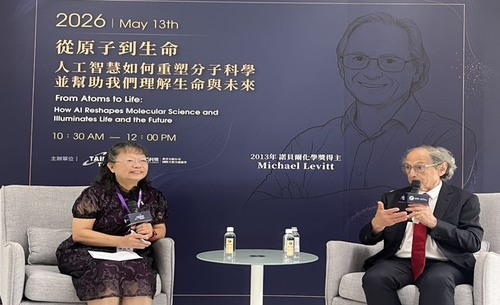
Young Observers Join Global Scientific Dialogue, Inspiring Fresh Perspectives for the AI Era
The forum invited international youth observers to participate throughout the event, enabling young people to move beyond listening from the audience and participate directly in world-class scientific dialogue. Taipei Tech students also seized the opportunity to ask Professor Levitt questions about scientific advances, interdisciplinary applications, and talent development in the AI era, sparking lively, in-depth discussions.
Taipei Tech stated that it has actively promoted the development of AI and technologies spanning multiple disciplines in recent years, continually strengthening AI teaching, research, and industry–academia collaboration. The university also encourages students to integrate skills in engineering, information technology, and applied fields, developing the global perspectives and practical capabilities needed to navigate technological change. Inviting a world-renowned scientist to engage with faculty and students further demonstrates Taipei Tech’s commitment to deepening international exchange and keeping pace with global technology trends.
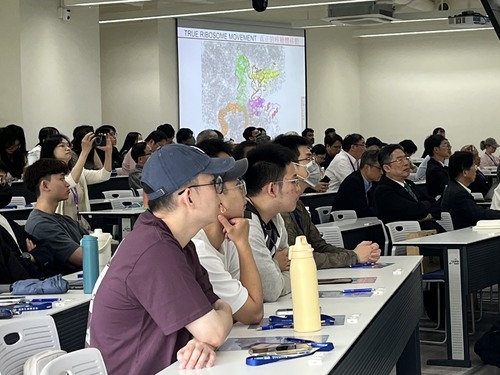
Expanding International Academic Exchange and Broadening Global Perspectives
The “2026 Nobel International Scientific Dialogue.” concluded successfully at Taipei Tech, marking another milestone in exchanges between Taiwan’s academic community and leading international scientists. Taipei Tech will continue working with partners across sectors to create more opportunities for faculty and students to engage in international academic exchange and broaden their perspectives on global scientific research.