Solar-Powered Boat Design for the Environment
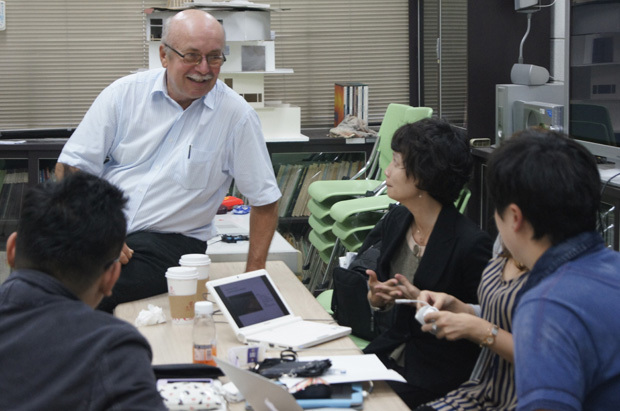
It was an honor for the students of the Department of Industrial Design to have Professor Ginnow visiting Taipei Tech for the ninth time since 1998. Professor Ginnow had taught at the School of Art and Design Berlin-Weissensee before his retirement. Similar to his previous visits to Taipei Tech, he presented lectures and coached the students during workshops. However, this time around, Professor Ginnow assigned students to design solar-powered boats; solar-powered boats are Professor Ginnow’s main focus of development right now. The lectures and workshops took place over a period of 10 days starting from Oct 26th to Nov 4th. Using what they had learned throughout the 10 days, the students were asked to make a final presentation. The students were divided into three teams, by regions: Taiwan, Asia, and Europe. The tasks included developing meaningful concepts, integrating solar technology, applying materials that are locally available, and respecting traditional designs. Each team was to present their own solar powered boat designs on the last day.
Team Taiwan was the first to make the presentation. Using bamboo from southern Taiwan, the team built a bird-watching boat, “Platalea 1”. It was named after a specific kind of migratory bird in Taiwan. In order to be more eco-friendly, team Taiwan aimed to shift the traditional bird-watching boat from a 45-seater boat to a 6-seater boat. The use of solar technology reduces noise and pollution. Without disrupting the birds’ natural surroundings, the photographers could move slowly (20m/hr) and quietly into their habitat.
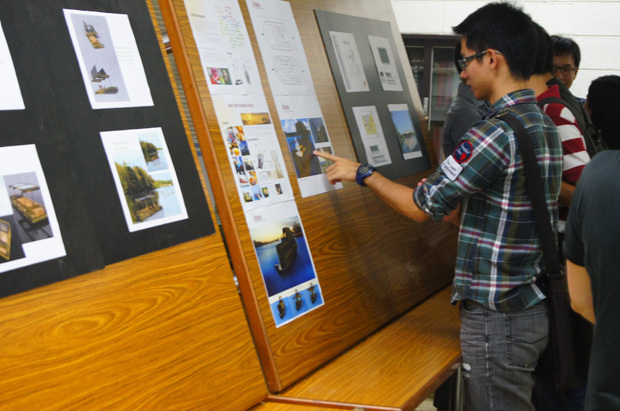
Team Asia presented Indian houseboat “Ahana”. The boat was designed to glide leisurely on rivers. Professor Ginnow appreciated their well sketched boat in the presentation. Ahana, a kind of herb that can cool temperature, was used as one of the materials of the boat. Rather than being able to carry many passengers, Ahana was designed for just two people. It has many amenities including a dining room, a half-opened bedroom and a deck for Yoga and sun tanning.
Finally, Germany was the target country of Team Europe. Their houseboat “Leuchten” was designed to bring a pleasant vacation to ordinary German families. Various spaces were also avaliable for children and the parents. Moreover, the use of solar power doesn’t harm the environment. To increase the efficiency of the solar power panels, the shape of the boat was very important. Team Germany had lots of discussions with Professor Ginnow on how to come up with the best shape, and the final design of the boat turned out to be very satisfactory to Professor Ginnow.
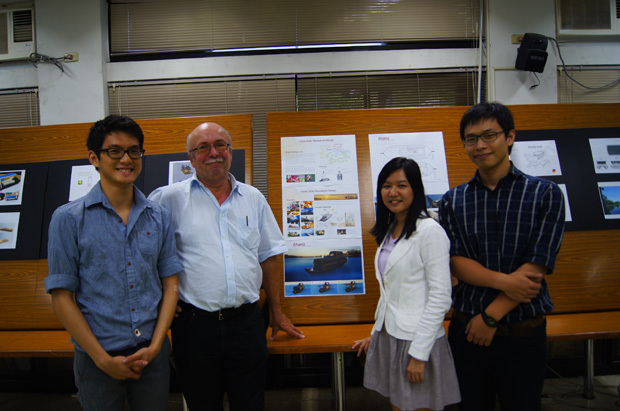
Professor Ginnow was especially impressed by the execellent design of Taipei Tech students. It reminded him of an experience a few years ago on an exceptional project that was done with the collaboration of German and Taiwanese students. Whereas German students would have plenty of opportunities to work and gain assistance from international companies, the Taiwanese students’ creations would be limited due to the lack of industrial foundation and cooperation with the universities. In order for the excellent work of students to have opportunities to be presented and gain experiences, university-industry cooperation is what Professor Ginnow wishes for the future.