Taipei Tech and PSA Launch NT$50 Million Industry–Academia Partnership
Advancing Sovereign and Agentic AI While Developing AI Talent
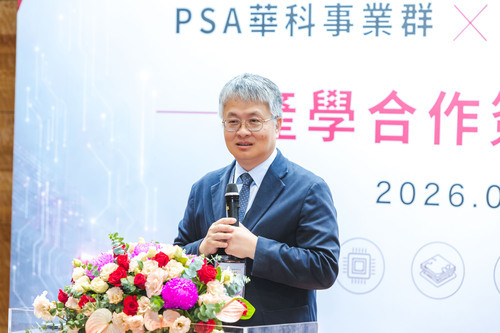
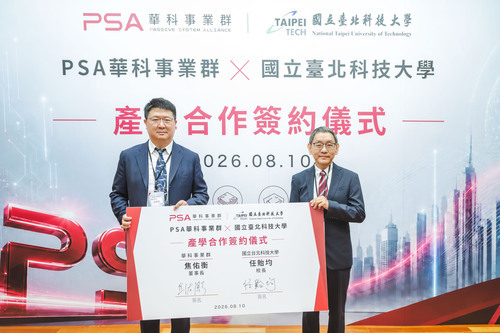
National Taipei University of Technology (Taipei Tech) and Passive System Alliance (PSA) held a signing ceremony on August 10 to launch a three-year industry–academia partnership with total funding of NT$50 million. Taipei Tech President Yi-Jun Jen and PSA Chairman Anthony Chiao signed the agreement, with Deputy Minister of Education Kuo-Wei Liu witnessing the signing. Centered on AI research and development and talent development, the partnership will advance sovereign AI and agentic AI by combining the university’s research capabilities with PSA’s industry experience, strengthening collaboration between academia and industry.
Deputy Minister Kuo-Wei Liu emphasized that talent development is key to strengthening national competitiveness. The Ministry of Education continues to promote closer collaboration between universities and industry, aligning academic research and development with industry needs. This partnership focuses on innovative AI applications, joint talent development, and advances in smart manufacturing. By pooling resources, the university and PSA will give students hands-on industry experience and develop technology professionals with both AI expertise and the ability to apply it in industrial settings.
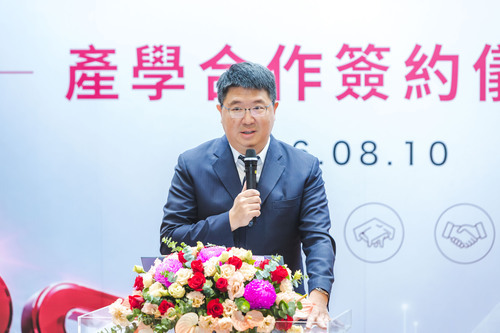
Taipei Tech President Yi-Jun Jen stated that the university has consistently upheld the principle that “industry poses the challenges; universities provide the solutions.” Companies identify real-world needs, and the university brings together research expertise across disciplines to address them collaboratively. Guided by PSA’s blueprint for its own computing center, the partnership will pursue AI research and development and deploy agentic AI in smart manufacturing and business operations. Applications will include production line system integration, predictive maintenance, quality improvement, enterprise knowledge management, knowledge and expertise transfer, and administrative process automation. Together, these efforts will create an enterprise-grade AI application ecosystem that supports security, autonomy, and sustainable development.
President Jen noted that the partnership will also include AI education, training, and hands-on learning opportunities, enabling students and faculty teams to gain practical experience by solving real business problems. Outstanding participants may have the opportunity to join PSA’s AI team, putting their learning into professional practice. Building on this partnership, Taipei Tech will accelerate the development of a “campus-wide AI testbed” and plans to apply for support under the Ministry of Education’s program to strengthen joint talent development by higher education institutions and industry in response to changing global conditions, further expanding the outcomes of its industry–academia collaboration.
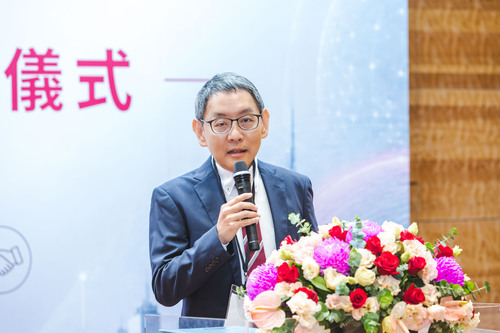
PSA Chairman Anthony Chiao stated that rapid advances in AI are driving industrial transformation, but talent remains the key to business competitiveness. “Schools equip us with knowledge; businesses give us hands-on experience,” he said. He expressed the hope that combining Taipei Tech’s research strengths in engineering, information technology, and technology education with PSA’s practical industry experience and global market presence would expose students to real-world industry challenges and help them develop innovative thinking, the ability to integrate knowledge across disciplines, and problem-solving skills.
Taipei Tech and PSA share a long history of collaboration. Since Walsin Technology Corporation joined International Industry-Academia Alliance of Taipei Tech (GLORIA Taipei Tech) in 2018, the two sides have steadily strengthened their partnership. In 2019, they introduced Industry 4.0 smart manufacturing technologies at PSA’s production facilities in Malaysia, with Taipei Tech professors leading student teams in on-site implementation. Over the years, the university has drawn on its smart manufacturing teaching factory, interdisciplinary research teams, and industry–academia collaboration resources to help PSA transform its production lines through smart technologies. It has also developed specialized training courses tailored to the company’s needs, building a pool of local talent.
Taipei Tech stated that it will remain focused on “technology leadership and talent development” while putting its principle of “industry poses the challenges; universities provide the solutions” into practice. By deepening industry–academia collaboration and combining its strengths in engineering, technology, and interdisciplinary research, the university will develop technology professionals equipped to meet the needs of tomorrow’s industries.
Related news:
https://money.udn.com/money/story/5612/9681539
https://www.technice.com.tw/campus/252399/
https://www.digitimes.com.tw/tech/dt/n/shwnws.asp?CnlID=1&id=0000764590_NQ96QRCO8PBCRH16MUVCA
https://www.ctee.com.tw/news/20260810701034-430502
https://udn.com/news/story/6929/9681590
https://money.udn.com/money/story/5612/9681516
https://www.taiwantimes.com.tw/app-container/app-content/new/new-content-detail?blogId=blog-9bc98f9d-54e2-41dd-99af-33862cceb5d3
https://www.digitimes.com.tw/tech/dt/n/shwnws.asp?id=0000764590_NQ96QRCO8PBCRH16MUVCA
https://www.ctee.com.tw/news/20260810701034-430502
https://money.udn.com/money/story/5612/9681516
https://udn.com/news/story/6929/9681590
https://www.cna.com.tw/news/ahel/202608100123.aspx
https://ec.ltn.com.tw/article/breakingnews/5534430
https://money.udn.com/money/story/5612/9681849
https://today.line.me/tw/v3/article/ZaRlaOQ
https://www.ntdtv.com.tw/b5/20260810/video/410534.html
https://strategicstyle.org/scstyle-8368/25191/