The Opening of Siew’s Study and Former Vice President Siew Wan-Chang’s Speech
Original Article from Taipei Tech Gazette Issue 46 By Prof. Kuang- Chen Chen (陳貞光);Ching-Li Huang(黃麗卿), Library; Chuang-Chuang Hsu (許妝莊),Office of Academic Affairs Translated by Paven Yu (于沛文),Fourth year undergraduate student,Department of English
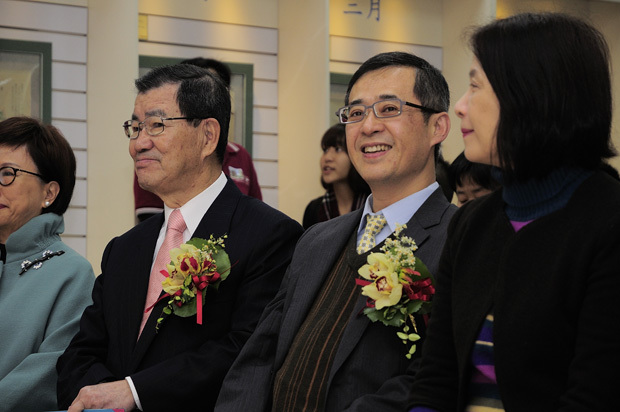
The recipient of Taipei Tech’s Honorary Doctorate Degree in philosophy and former Vice President (VP) of Taiwan, Mr. Siew Wan-chang (Vincent C. Siew, 蕭萬長) has selflessly donated more than 1000 folders containing his political career and more than 500 books ranging across both Eastern and Western literature to Taipei Tech prior to his retirement from public office in April 2012. To demonstrate the experiences and foot-prints of an assistant to the head of state for half a century, a secluded area was created with “Siew’s Study” as the main theme. Through books and folders displayed at “Siew’s Study”, Taipei Tech hopes that their students can emulate the experiences and achievements of former VP Siew.
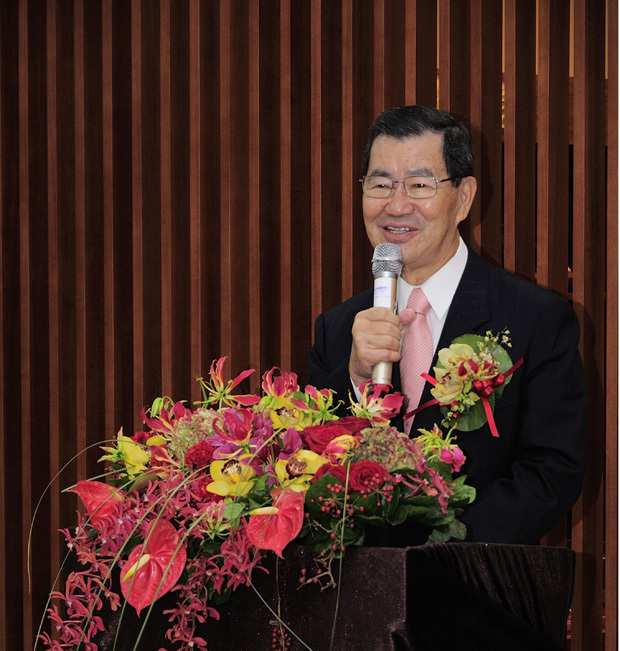
Former VP Siew stated that he was very thankful and honored to be a Taipei Tech alumna. During his speech, he expressed his appreciation for his “mother school’s” thoughtfulness for establishing the “Siew’s Study” in hopes of enriching Taipei Tech pupils with role models. He wishes that, through his donation of literature and sharing of his life experiences, this little corner can become the students’ go-to place for visiting and discussion. Vice President Siew also promises to continue to endow the content of the study. Taipei Tech President Leehter Yao (姚立德) and the Director of Technological and Vocation Education, Lee Yen-Yi (李彥儀) also have great prospects for this corner in the library. They expect that it will stimulate students to learn, and that more talented individuals like Vice President Siew can be cultivated and contribute to the nation and society.
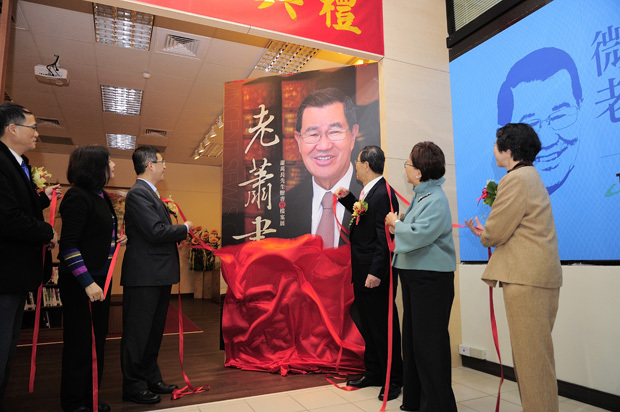
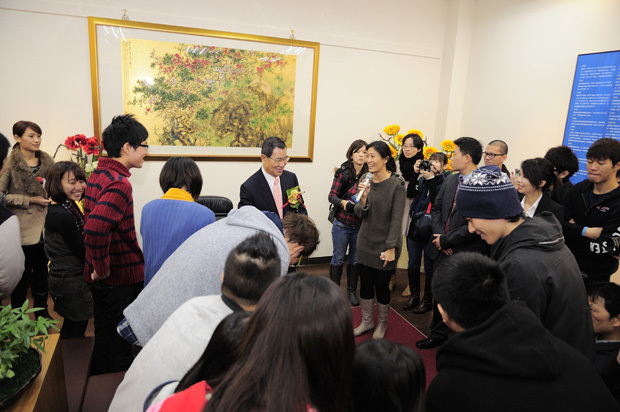
Siew’s Study was unveiled by VP Siew along with his wife (朱俶賢), Taipei Tech President Yao, Director Lee, and many other delegates. During the tour of “Siew’s Study”, Siew talked much about the literature displayed and some interesting anecdotes; the transcript in which he received 100 percent in two of his subjects when he was in college, and other original certificate for his examination of government positions. In addition, the seat that Siew had once used was placed in “Siew’s Study” to embellish the atmosphere of literature.
After the showing of “Siew’s Study,” former VP Siew had an interactive session between Taipei Tech students. The students from the College of Humanities and Social Science eagerly participated in the Q&A session. Siew especially mentioned his support for youths participating in public affairs, and that he cares deeply about the society and the development of the next generation.
In the humanities and social science seminar that followed, Siew addressed the faculty and students on “Soft Power and Competitive Power.” He started with the concept of “an island of humanity, social science , and technology” advocated by former CEO of Acer Stan Shih (施振榮). Siew believes that technology without liberal arts is a tree without roots, and only with the spirit of humanity can technology be rooted and grow. The era of manufacturing and manual labor has passed; it is now an era for innovation and for people to compete with soft power.
Siew then talked about the spirit of innovation originating from education. Education enhances the overall quality and strength of soft power. Also, education is the most trustworthy investment for a nation. The investment in education, improvement of quality in humanity, openness in society, and government efficiency are all keys to the development of an innovative country.
Siew ended with a wish that Taipei Tech would be the leader of Taiwan in becoming an island of humanity and technology. He hoped that the spirit of humanity can be rooted, so that the technological development of Taipei Tech will be rewarded for its efforts, and that it can continue to contribute to the Taiwanese society.