Find yourself on world map: Stanley Yen speak at Taipei Tech
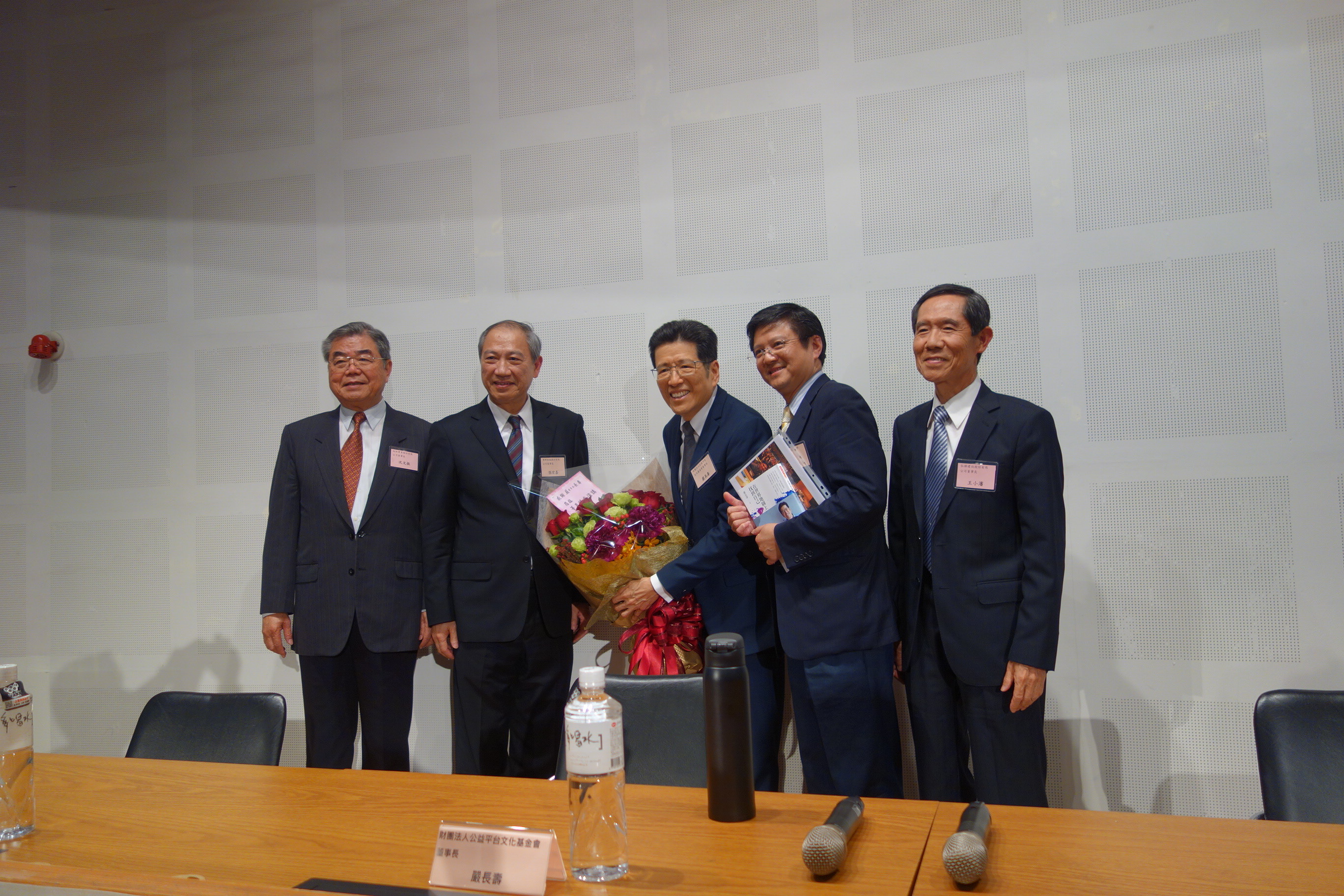
Facing the globalized society, how do we find our positions on the world map? Stanley Yen(嚴長壽), Chairman of the Alliance Cultural Foundation, shared his life experience as well as insight to Taipei Tech students on April 28. Look around the 200-seats International Conference Room, audiences were either taking notes or trying really hard to catch every word that Chairman Yen has to say. During the 2 hour speech, Chairman Yen didn’t use one single Power Point slide yet still get people’s attention by his wit and humor.
Mr. Yen used a true story to start his talk. When he gave a speech at Tainan National University of the Arts in 2008, he told the graduates there if they only aim for becoming world-class artists such as musician or painter, they will feel frustrated because the odd for them to achieve their goal upon graduation is rather small. On the other hand, if they consider arts a way to lead society to civilization, then there are plenty of opportunities anytime and anywhere. The meaning behind this story is to encourage students not to focus on one role/profession but to be more open-minded and embrace every opportunity that come into our lives.
In Mr. Yen’s latest book “Find Yourself on World Map”, he pointed out that education is the key to keep up the pace in this rapidly changing world. He took America in the 1900’s for an example. Back in that time, about 40 percent of people worked in agriculture while machinery was evolving in an incredible high speed. Now, only 2 percent of people work in agriculture, yet we didn’t see devastating unemployment wave in the country. The reason behind this is that the U.S. government foresaw the trend and had lots of young people keep studying at school rather than work right after graduation. With the help of education, they managed to prepare those students for new job market where robots had replaced many labor works.
Mr. Yen noted that we must not only recognize the trend in the world but also realize our strengths and backdrops in order to earn a place on the world stage. Speaking of the capabilities a student need for their future, Mr. Yen pointed out three directions. First, you must sharpen your professional skills. Second, you have to practice critical thinking in order not to be overwhelmed by information and opinions. Third, you need to learn how to live a quality life in other words to cultivate one’s humanistic quality.